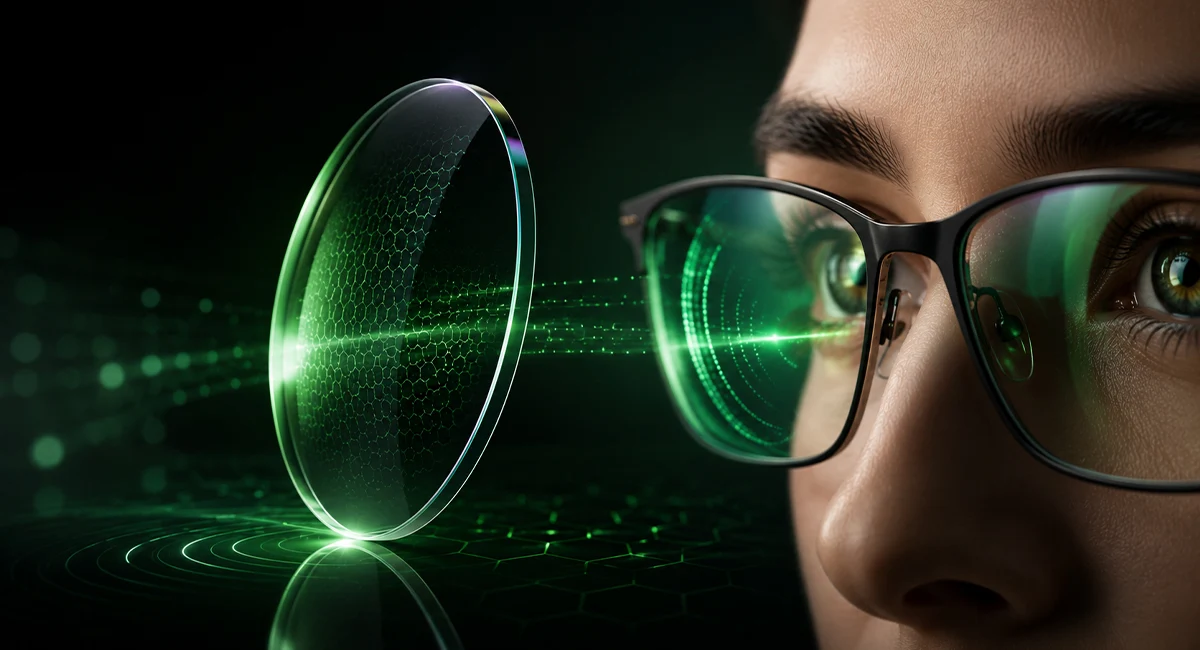
Advanced lens coatings significantly enhanceModern optical lenses are no longer designed only to correct vision. With the advancement of optical technology, lenses have evolved into highly engineered solutions that improve visual performance, enhance comfort, and provide better protection for everyday life. One of the most important developments in lens technology is the introduction of advanced lens coatings.
Lens coatings are thin, specialized layers applied to the surface of optical lenses to improve their functionality. These coatings can reduce reflections, protect against harmful light, repel water and dust, and increase the durability of lenses. Today, premium lenses often combine multiple coating technologies to deliver a clearer and more comfortable visual experience.
Anti-Reflection Coating for Better Clarity
One of the most widely used lens technologies is anti-reflection coating. Without a protective coating, a significant amount of light can reflect from the front and back surfaces of a lens. These reflections can reduce visual clarity, create unwanted glare, and make it more difficult for the eyes to focus comfortably.
Anti-reflection coatings minimize these reflections by allowing more light to pass through the lens. This results in sharper vision, improved contrast, and better optical performance, especially in challenging lighting conditions such as nighttime driving, office environments, and digital screen use.
For eyeglass wearers, anti-reflection coatings also improve the appearance of lenses by making them look clearer and almost invisible. This allows others to see the wearer’s eyes more naturally without distracting reflections.
Blue Light Protection and Digital Comfort
With the increasing use of smartphones, computers, and digital devices, many people spend several hours each day exposed to artificial light sources. Blue light filtering technologies have become an important feature in modern optical lenses.
Blue light protection coatings are designed to reduce exposure to high-energy blue light emitted from digital screens and artificial lighting. These lenses can help improve visual comfort during long periods of screen use by reducing glare and enhancing contrast.
Although healthy screen habits remain important, blue light lens technologies provide an additional level of comfort for people who frequently work with digital devices.
Hydrophobic and Dust-Resistant Technologies
Keeping lenses clean throughout the day can be challenging. Fingerprints, water drops, dust, and environmental particles can affect both appearance and visual quality.
Hydrophobic coatings create a water-repellent surface that prevents moisture from spreading across the lens. Instead of forming large water marks, droplets roll away more easily, helping maintain a cleaner surface.
Anti-dust technologies also reduce the attraction of particles to the lens surface, making cleaning easier and improving long-term usability. These features are especially valuable for people who use their glasses in outdoor environments or active lifestyles.
UV Protection for Long-Term Eye Health
Exposure to ultraviolet (UV) radiation can have negative effects on eye health over time. High-quality optical lenses often include UV protection technologies that help block harmful ultraviolet rays.
UV protection coatings provide an additional layer of defense by reducing the amount of UV radiation reaching the eyes. This feature is particularly important for individuals who spend significant time outdoors and require reliable protection throughout the day.
Scratch Resistance and Lens Durability
Daily use exposes lenses to potential damage from cleaning, handling, and environmental conditions. Scratch-resistant coatings improve the surface hardness of lenses, helping them maintain their clarity and appearance for a longer period.
While no lens coating can make lenses completely scratch-proof, high-quality protective layers significantly improve resistance against everyday wear and tear.
The Future of Lens Coating Technology
As optical technology continues to develop, lens coatings are becoming more advanced and specialized. Future innovations will focus on creating lenses that adapt better to different environments, provide improved protection, and deliver even greater comfort.
Modern consumers expect more from their eyewear. They want lenses that not only correct vision but also support their lifestyle. Advanced coatings make this possible by transforming traditional lenses into intelligent optical solutions.
In conclusion, lens coatings play a vital role in improving vision quality, comfort, and durability. From reducing reflections and protecting against UV rays to improving cleanliness and digital comfort, advanced coatings have become an essential part of premium optical lenses.